
Shares of brokerages and market infrastructure institutions (MIIs) witnessed heavy selling pressure following the Securities and Exchange Board of India's (Sebi's) pivot to a uniform fee structure, which analysts fear could dent revenues. Discount brokerages, which currently benefit from a spread between client charges and exchange fees, are expected to be most affected. Shares of Angel One, the third-largest brokerage by active clients, fell 8.7 per cent. Groww and Zerodha, the largest brokerages, are not publicly listed.

In June, Sensex went up 6.6% and Nifty 6.9%, their best monthly gains since December 2023.

'This trend will continue as long as the bull run continues.'

This year's tally is the second best ever after 2022 when 16 firms raised Rs 40,311 crore, led by LIC's biggest-ever IPO.

The spike in volatility, amid election uncertainty, has done little to dent the confidence of retail investors, shows demat account addition and equity mutual fund (MF) investment data. In May, investors opened a net 3.6 million demat accounts, taking the total to 158 million. MF data released on Monday pegged the net inflows into equity schemes and SIP investments at new record highs of Rs 34,697 crore and Rs 20,904 crore, respectively.

The expectations of a borrowing cut by the government faded among bond-market participants after the general election results because they feel the compulsions of running a coalition may put pressure on the exchequer, according to dealers. The recent trend of moderate depreciation in the rupee's nominal effective exchange rate (NEER) might not persist if there are significant changes to the structural reform agenda.

The Reserve Bank of India's (RBI's) record surplus transfer to the government has raised hopes among bond traders that the government might reduce its gross borrowing for the current financial year (2024-25/FY25) by up to Rs 1 trillion. The RBI approved a dividend of Rs 2.11 trillion for the central government for 2023-24, marking an increase of roughly 141 per cent from 2022-23 (FY23). In addition, the contingency risk buffer has been raised to 6.5 per cent from the previous 6 per cent.

The top 100 companies have accounted for 63% of the gains (Rs 51 trillion out of Rs 81 trillion), while firms beyond the top 100 have contributed 37 per cent (Rs 30 trillion).

The universe of stocks trading at a 12-month forward price-to-earnings (P/E) multiple of 50x or more has swelled by 2.5x to 104, indicating the growing froth in the market. In March 2023, the number of stocks with a P/E of 50x and 100x stood at 41 and 3, respectively, which has now grown to 104 and 9, according to an analysis by Kotak Institutional Equities (KIE).

'Sectors like e-commerce, small finance, housing finance, and healthcare are in great favour, and people are paying a PEG ratio of up to 5, which is dangerous.' 'Wealth destruction is inevitable.'

Debt mutual fund (MF) schemes, which witnessed relatively muted inflows in the past three years, saw a surge in investor interest in April amid election-induced volatility in the equity markets. Active debt funds garnered nearly Rs 66,000 crore net inflows in April, most at least since December 2020.

Foreign portfolio investors (FPI) have pulled out $3.5 billion from India's equity markets so far this month. The selling comes on the back of election-induced volatility and the rotation of flows from India to China, where stocks are available at half the valuations. If the selling pressure remains at the current level, this will be the highest FPI pullout since January 2023.

Market chatter suggests that the BJP could win fewer than 300.

The number of dematerialised (demat) accounts required to hold shares and other securities in electronic format rose by 3.1 million in April, bringing the total tally to a fresh record of 154.5 million. Since December last year, the new additions have consistently remained above the 3 trillion mark, a sign that the stock markets continue to attract new investors despite a spike in volatility.

Foreign portfolio investors' (FPIs') shareholding in NSE-listed companies fell 51 basis points sequentially to 17.68 per cent in the quarter ended March 31, 2024, according to data compiled by PRIME Database. This is the lowest FPI shareholding since December 2012. From the recent peak of 21.21 per cent at the end of December 2020, FPI shareholding is down 353 basis points.

'Sell in May, go away' is a popular market adage. But 'Don't sell any new shares in May' is the best kept secret of Dalal Street that's set to break. Sample this: the last four General Election election cycles starting 2004 have not seen a single initial public offering (IPO) launch during the month of May.

'Business families like the Godrej group are increasingly realising that an amicable settlement is better.' 'Else, the wealth of all shareholders gets destroyed.'

Market players attribute the rally in small and midcaps to flows from retail investors and domestic institutions.

The Reserve Bank of India (RBI) abstained from selling any US dollars throughout February, for the first time in nine months. The decision comes amid increasing pressure on the rupee, as expectations of rate cuts by the US Federal Reserve keep pushing back. The last time the RBI did not sell dollar over a month was in May 2023.
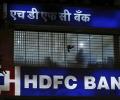
HDFC Bank's latest shareholding data showed that the room for foreign investment has fallen just 5 basis points short of the threshold set by Morgan Stanley Capital International (MSCI) to fully include the stock in its indices. Currently, the index provider has applied an adjustment factor of 0.5 since the foreign room is less than 25 per cent. Removal of the adjustment factor will result in inflows of a massive $4.8 billion (Rs 40,000 crore) into HDFC Bank, according to Brian Freitas, a New Zealand-based analyst with Periscope Analytics.
 © 2026 Rediff.com - Advertise with us - Disclaimer - Privacy Policy - Sitemap - Feedback - About us - Terms of use - Grievances